Single-Use Plastic Free Campus Verification
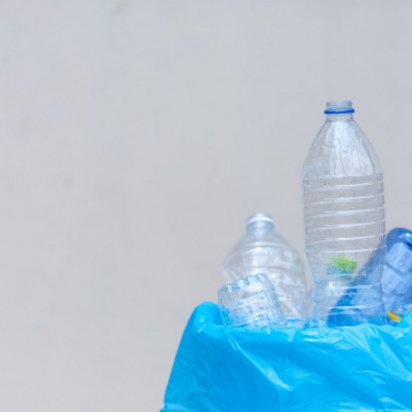
Demonstrate your commitment to eliminating single-use plastics through independent, evidence-based third-party verification.
Single-use plastics are a significant source of environmental pollution due to their short useful life and persistent environmental impacts. TÜV India’s Single-Use Plastic Free (SUP-Free) Verification provides a structured, transparent and evidence-based framework for organizations and campuses to identify, eliminate and control single-use plastics across their operations.
The TUV India methodology, establishes criteria for evaluating the effectiveness of an organization's measures to eliminate single-use plastics and transition towards reusable, recyclable, compostable or other sustainable alternatives.
SUP-Free Verification is an independent third-party verification of an organization's efforts and systems to eliminate single-use plastics within its defined operational boundary.
The verification assesses whether the organization has:
Independent & Credible
Independent third-party verification enhances the credibility and reliability of an organization's SUP-Free claim.
Evidence-Based Assessment
TUV India evaluates claims using documented records, procurement data, inventory information, supplier declarations and on-site evidence.
Regulatory Alignment
The verification considers applicable national, state and local requirements relating to single-use plastics and plastic waste management.
Beyond Plastic Substitution
The TÜV India approach goes beyond simply replacing plastic products. It emphasizes source reduction, reuse, circularity, responsible procurement, behavioural change and continuous monitoring.
Strengthening Sustainability Performance
SUP-Free initiatives can contribute to pollution prevention, resource efficiency, circular economy practices, regulatory compliance and institutional sustainability leadership.
The TUV India SUP-Free Verification methodology can be applied to campuses and organizations seeking to systematically eliminate single-use plastics from their operational boundaries.
Potential applications include:
The scope is defined according to the organization's operations, locations, SUP categories and applicable requirements.
The assessment covers the organization's overall SUP management system and operational performance.
1. SUP Inventory & Baseline
Assessment of:
The methodology recommends at least 12 months of SUP data for initial verification.
2. SUP Elimination & Substitution
Verification of measures implemented to:
3. Sustainable Procurement
Assessment of:
4. Operations & Usage Controls
Verification across relevant areas such as:
5. Plastic Waste Management
Assessment of:
6. Supplier & Value Chain Controls
The assessment considers whether suppliers, vendors and waste handlers have appropriate controls to prevent the reintroduction of SUP materials into the organization's supply chain.
7. Awareness & Behavioural Change
Verification of:
8. Monitoring & Continual Improvement
Assessment of:
The verification follows a structured, risk-based assessment process.
Step 1 – Application & Agreement
The scope, applicable methodology, regulatory requirements, verification schedule and commercial terms are established.
Step 2 – Data Submission
The organization provides relevant SUP data and supporting documentation, including procurement, usage, substitution, recycling and regulatory records.
Step 3 – Stage I: Readiness & Planning
TUV India reviews:
High-risk SUP categories, procurement practices and substitution measures are identified for detailed assessment.
Step 4 – Desk Review
Submitted information is reviewed to identify gaps, focus areas and key evidence requirements before the detailed verification.
Step 5 – Stage II: On-Site Verification
TUV India conducts on-site verification, including:
Step 6 – Findings & Corrective Actions
Identified nonconformities or gaps are communicated to the organization. Appropriate corrective action evidence is reviewed for closure.
Step 7 – Technical Review
An independent TUV India technical review ensures consistency of the verification outcome and credibility of the verified SUP performance.
Step 8 – Verification Decision & Statement
Following successful completion of the verification process and technical review, TUV India issues the applicable SUP-Free Verification Statement.
| Assessment Area | Key Focus |
| SUP Data Traceability | Inventory, consumption, reduction and elimination data |
| Regulatory Compliance | Applicable national, state and other requirements |
| SUP-Free Policy | Management commitment and documented policy |
| Operational Controls | Controls preventing SUP procurement and usage |
| Competence & Training | Employee and stakeholder awareness |
| Documentation & Records | Procurement, substitution, disposal and supplier records |
| Waste Management | Segregation, collection, recycling and authorized disposal |
| Supplier Controls | Supplier/vendor declarations and supply-chain controls |
| Monitoring & Reporting | KPIs, audits, management review and progress |
| Site Verification | Physical verification of SUP presence and controls |
Depending on the applicable scope, TUV India evaluates relevant requirements including:
The methodology specifically identifies the Plastic Waste Management Rules, SUP-related requirements and EPR Guidelines among its normative references.
As part of the verification, TUV India may assess applicable requirements relating to:
The methodology includes detailed verification protocols covering regulatory compliance, procurement, operations, waste management, alternatives, circularity, monitoring and site inspection.
Organizations may be required to provide:
SUP Baseline & Inventory
SUP Mapping
Elimination & Substitution
Regulatory Compliance
Waste Management
Training & Awareness
Supporting Evidence
The complete tentative document list is provided in Annexure 1 of the TUV India methodology.
The methodology provides for a three-year SUP Management Verification cycle, with:
A new verification statement is issued annually based on the verified SUP reduction, elimination or diversion performance for the respective year.
TUV India believes that becoming SUP-Free is not simply about replacing one disposable product with another.
A successful SUP-Free program combines:
This approach helps organizations embed SUP management into procurement, operations, employee behaviour, supplier relationships and waste-management practices.
With TUV India's experience in sustainability, environmental management, waste management, carbon and ESG-related verification, organizations can benefit from an independent assessment framework designed to provide confidence in their SUP-Free claims.
Our verification approach emphasizes:
Impartiality | Competence | Evidence | Traceability | Transparency | Continuous Improvement
These principles are explicitly incorporated into the TUV India SUP-Free methodology.
Take the next step towards a single-use plastic-free campus or organization with TUV India.
Contact TUV India to discuss your:
Talk to our Sustainability Experts