Green Hydrogen & Green Ammonia Verification Services
TUV India – Independent Verification for Renewable and Low-Carbon Hydrogen
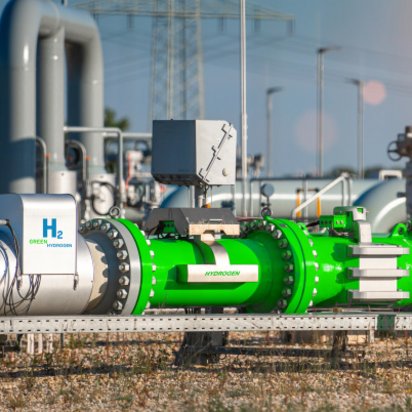
TUV India – Independent Verification for Renewable and Low-Carbon Hydrogen
The global energy landscape is undergoing a significant transition, with renewable energy, alternative fuels and emerging low-carbon technologies playing an increasingly important role in reducing dependence on fossil fuels.
While sectors such as power generation and light-duty transport are increasingly adopting low-carbon solutions, heavy industry and heavy transport remain challenging to decarbonize. Green Hydrogen and Green Ammonia offer promising pathways to address these hard-to-abate sectors and support the transition towards a low-carbon economy.
TÜV India provides independent verification services for Green Hydrogen and Green Ammonia, helping organizations demonstrate the environmental integrity, transparency and credibility of their sustainability and decarbonization claims.
Green or Renewable Hydrogen is hydrogen produced through electrolysis of water or aqueous solutions using electricity from renewable, non-biological sources.
As described in the source methodology, Renewable Hydrogen is associated with a minimum 70% reduction against the specified comparator value of 94 g CO₂-eq/MJ, in accordance with the referenced RED II framework.
Green Hydrogen can support decarbonization across applications including:
Green Ammonia is an energy carrier derived from renewable energy. Renewable hydrogen can be converted into ammonia using atmospheric nitrogen. Green Ammonia can subsequently be used in a range of applications, including as an energy carrier and for recovery of hydrogen for further energy use.
Green Ammonia therefore provides an important pathway for storing, transporting and utilizing renewable energy, particularly where direct electrification may be challenging.
TUV India's verification approach is designed to evaluate the relevant requirements and criteria applicable to the Green Hydrogen/Ammonia production system and its associated GHG emissions.
Key Verification Areas
Life Cycle GHG Emissions: All relevant direct and indirect GHG emissions occurring across the defined life-cycle boundaries are identified and evaluated in accordance with the applicable requirements.
GHG Offsetting: Where applicable, direct GHG offsetting measures are quantified in accordance with ISO 14064, as specified in the source methodology.
Renewable Energy & Hydrogen Characteristics: The verification considers the applicable characteristics and requirements associated with renewable/green hydrogen and low-carbon hydrogen.
RFNBO Requirements: For applications involving Renewable Fuels of Non-Biological Origin (RFNBO), the applicable requirements and criteria referenced in the methodology are considered during verification.
Renewable / Green Hydrogen: Renewable or Green Hydrogen is produced through electrolysis of water or aqueous solutions using electricity from renewable, non-biological sources.
The source document specifies a minimum 70% reduction against the comparator value of 94 g CO₂-eq/MJ, as referenced under RED II.
Low-Carbon Hydrogen: Low-Carbon Hydrogen encompasses different hydrogen production routes and enables multiple technologies and processes to be considered for certification.
The source methodology specifies a minimum 70% reduction against the comparator value of 94 g CO₂-eq/MJ.
Carbon-Neutral Hydrogen: Carbon-Neutral Hydrogen refers to hydrogen where emissions attributable to production are compensated through mechanisms such as purchasing and retiring registered CO₂ reduction certificates from recognized climate-protection programmes and/or emission rights from established trading systems.
The EU framework for Renewable Fuels of Non-Biological Origin (RFNBO) establishes conditions under which hydrogen, hydrogen-based fuels and other energy carriers can qualify as RFNBO.
The source material identifies the relevance of the EU Fit for 55, Delegated Acts and RED II requirements in the verification of Green Hydrogen and Green Ammonia.
The methodology also highlights two important criteria:
Additionality: The renewable electricity used for hydrogen production must satisfy the applicable additionality requirements.
Temporal & Geographic Correlation: The applicable requirements concerning the temporal and geographic relationship between renewable electricity generation and hydrogen production must be addressed.
Both criteria are identified in the source material as necessary considerations for qualifying as renewable hydrogen.
Our verification process typically follows a structured and transparent approach:
01 — Offer Finalisation
Understanding the project, production system, applicable requirements and information provided by the client to finalise the verification offer.
02 — Document Pre-Check
Review of submitted documentation and information to assess readiness for verification.
03 — Site Assessment
Assessment of the relevant production facilities, processes, systems, records and supporting evidence.
04 — Verification & Evaluation
Evaluation of the applicable requirements, including relevant GHG emissions and other verification criteria.
05 — Reporting
Documentation and reporting of the verification results.
06 — Verification Statement
Issuance of the verification statement upon satisfactory completion of the verification process.
Independent verification can help organizations strengthen the credibility and transparency of their Green Hydrogen and Green Ammonia claims.
Build Market Confidence
Provide greater credibility and reassurance regarding the integrity, completeness and transparency of environmental and sustainability statements.
Support Market Access
Global buyers and institutional investors increasingly seek evidence supporting sustainability and environmental performance claims. Independent verification can help demonstrate the robustness of such claims.
Support Sustainability Strategy
Verification can help organizations align their sustainability strategy with applicable government policies and regulatory requirements and may support applications for relevant government funding mechanisms.
Strengthen Stakeholder Confidence
Independent third-party verification provides assurance to customers, investors, business partners and other stakeholders regarding reported performance.
TUV India is an established partner for Inspection, Certification, Validation and Verification of Climate Change and Sustainability services.
Our Strengths
TUV India Pvt. Ltd., part of the TÜV NORD GROUP, provides independent technical, quality and safety services focused on delivering future-ready solutions through technological excellence and integrity.
With a presence at more than 40 strategic locations in India, TUV India combines local expertise with the international capabilities of TÜV NORD GROUP. The organization supports clients across diverse sectors including renewables, power, manufacturing, chemicals, oil & gas, infrastructure, food, automotive and other industries.
TUV India has over 1,500 experts across India, supported by more than 14,000 TÜV NORD experts globally, providing a broad platform of technical and sustainability expertise.
Green Hydrogen and Green Ammonia can play a critical role in the decarbonization of hard-to-abate sectors.
TÜV India's independent verification services help organizations demonstrate that their sustainability and GHG-related claims are supported by a structured assessment of applicable requirements, life-cycle boundaries, emissions information and supporting evidence.
Talk to TUV India
Planning a Green Hydrogen or Green Ammonia project?
Connect with our sustainability and climate-change experts to understand the applicable verification requirements and develop a verification approach suited to your project.